Sunday, November 5, 2023

LCP

 A new acronym has been invented and it's all over the place: LCP - Laser Cut Parts. Essentially Vans needed to speed up production and went for the unprecedented technique (in aircraft production) of laser cutting holes all the way up to the correct dimension.

When done correctly, this poses no more deterioration to the material than punched holes (all the way up to the correct dimension), according to Van's. This is probably correct because it is hard to think of a worse method to make a hole than to punch a hole, where 10% of the thickness is a clean cut, and 90% is literally torn out due to shear forces, leaving residual stresses at max around the hole.

However, the trajectory of the laser is of outmost importance, and the subcontractors did this the wrong way, leaving a large heat affected zone at one specific point. When dimpled and/or riveted, these holes have a tendency to crack. We don't want cracks in our airplanes.

All about this can be read at Van's site. Another thing that can be found there is a very unfortunate message by Van. He literally say the company is de facto bankrupt. They have run out of money, and a new team will lead the company in a transitional phase to get it back on it's feet.

Why this happened is many faceted apparently, I have no internal info, but I think it's safe to say that Corona is the main reason. This ended up in Vans selling kits at a loss, in the degree they even managed to produce kits due to lead times of materials and equipment that have affected every industry. Everything they did to try to fix it, only made it worse. A truly remarkable chain of bad luck as far as I can see. It didn't help much that lots of people working from home during Corona, figured out this is the time to build an aircraft.

I'm not too worried about Van's. Someone will surely inject money into the company, and things will get back to some sort of normal. After all, they are the world's largest manufacturer of SEP's, and all their products are highly popular.

What is more disturbing is the state of the builder community. Lots of builders are blinded by the LCP event, and create all kinds of phantasies of how this happened to them. I mean, the LCP thing is bad, but for each builder it will at max set them back a couple of thousands of US$, and that is if they have to re-purchase new parts, which they most probably won't have to. They also behave like they have no saying in the solution of their aircraft. I mean, who is producing this aircraft? It's not Van's, it's the builder! Sometimes the words "either you are part of the solution, or you are part of the problem" is more true than this worn out phrase usually is. 

At least on VAF things seem to be going in the right direction now. Positive problem solving rather than negativity. Things will be OK IMO. On other sites, not so much. They are mostly used for the negativity that admins finally have managed to stop at VAF.

As for myself, I'm building my third shop now. The Onex is more or less finished. Soon it will be back to the -4 :-) 

Friday, June 28, 2013

A fundamental change of things

The RV-4 will be put on hold for some time. I have just ordered a Onex kit. The reasons for this are:
  • The RV-4 takes too long, I want to have a flying aircraft. To get a flying aircraft from where I stand today is faster and cheaper with a Onex kit. Work and other things in life takes too much time for me to be able to finish the RV-4 in a reasonable time frame right now, and I'm not getting any younger. The Onex is about an order of magnitude faster too build than the RV-4.
  • I have no hangar space.
  • I want to use Mogas.
  • When the Onex is finished, I can continue to build the RV-4, hopefully with a ULPower engine that runs on mogas.
  • And of course, I just love the Onex, a single seater aerobatic airplane with a VW engine. Nothing can beat the charm of that.
So, the Onex is simply a faster, cheaper and much more certain route to a flying airplane. An inevitable effect of this is that instead of building one aircraft, I am building two. Is that a wise thing? probably not, but then again, the process of building just a single airplane in your home/garage is not what you would define as a wise thing to do. Twice as much fun.

I have made a separate blog for the Onex here.  

Wednesday, June 12, 2013

And there was light

The new shop is finished. Took a new panorama shot with the lights.

Sunday, June 9, 2013

Shop starting to look like a shop

Only lights remains. Took a panorama shot.

Sunday, May 26, 2013

3.72 m of IKEA and PocketFMS

Finished both tables today. They fit with the windows so I can have some daylight (or darkness during winter time :-)

PocketFMS works like a charm. The batteries lasts several hours (at least 5-6 when running PocketFMS) and the Nexus7 has a very bright screen and is readable in sunlight. I am very satisfied with this setup; Nexus 7 and PocketFMS. I also bought this from DealExtreme, a 9600 ma external battery to charge phones and pads and any other gadget, enough for two full charges of the Nexus 7. With that setup I will have more than enough battery power.
 

IKEA work table

Along one wall of the new shop I will have a table. A purchased 2 kitchen table tops from IKEA. They can be made in several materials and colors. Mine are made of wood composite, covered with a film of a plastic of some sort in white with gray/black dots. The dimensions are 610*1860*35 mm. Probably not necessary, but I have seen wood composite sag over time if they are loaded, so I made a frame underneath. The frame was made of 38*68 mm laminated spruce bought at the local "Byggmax". Because it is laminated, I think it will not bend and warp like unlaminated wood often do. For the legs I used adjustable steel legs, also from Byggmax. The whole thing was cheap and very quick to set up, and very durable. Underneath the tables I will have some shelves or closets, but I haven't gotten to that just yet. (I originally planned some shelves and closets with the top mounted directly on top, but with the current config, I am free to move things around).

It will also work as a stand alone table, but the legs will need to have some diagonal braces in that case. I have two other tables for that.


Wednesday, May 22, 2013

Finished with floor and walls in new shop

Last bits of wall and floor in the new shop is finished, at last.

Thursday, May 9, 2013

Engine out in the Pawnee

After a long and high flight at 6000 feet with a glider, the last before re-fuelling, I did the usual slow spiral to retract the towing rope. I usually do it at 75-80 mph, any faster and the aerodynamic drag on the rope becomes to large for the winch motor. The mixture is leaned and carb heat is on. The descent is rather fast and the RPM is 1500-2000. When the rope was fully retracted I pushed the mixture and throttle wfd and headed for downwind 25. No reaction from the engine. Checked mixture, magnetos etc, but nothing. The engine was windmilling. I then radioed mayday, explained my situation, and continued towards downwind 25. I remember I was thinking about the surreality of the situation, "this isn't happening to me". But it was :-( I mean, that's the kind of thoughts one has before something is happening, not while it is happening :-) Even when training for emergency landings, I never really thought it would actually happen. And if it would happen, I surely would make a good landing :-)

I was high, about 4500 feet, the field is at 1800 feet. I thought initially I had lots of height for 25, but the descent with the wind-milling 4 blade propeller was huge. I don't remember looking at the VSI, but as I came on the downwind leg just before the level of the threshold at 07, I saw that the safer option was turning to final 07 and perhaps take a 360 to lose height instead of betting on the L/D ratio. At 4500 feet I couldn't really judge the L/D ratio, but it became increasingly obvious the lower I got. The L/D was in the brick league. So I turned to final 07 for a tailwind (10 knots) landing. I was too high at that point, but way to low to make a 360. I crossed the extended centerline, did a 150 degree turn around towards 07 from the north. At final I applied full flaps and sideslipped down. I landed about 1/3 into the field, rolled along and managed to turn into the taxi strip to stop.

I got all kinds of honors from the glider pilots for an excellent off engine landing, which was nice. Then we started thinking about what was wrong with the engine. Statistically the number one source of engine failure is fuel starvation. We checked the tank, and surely, it was completely empty. Ugh.

How could this happen? Our Pawnee has a history of running out of fuel, it has happened twice before. The last time with some damage. Our routine is to fill full tank after 10 launches. Looking at the log, the total feet of towing gliders, I should use about 98 litres for the last 10 flights based on our statistics for fuel consumption per towed altitude feet. I had to check, filled up the tank, and at 97 litres it was full. The problem with this is the tank on the Pawnee is 140 litres. What has happened to the last 40+ litres?

When I got home I filed (the mandatory) files to the Norwegian aviation authorities. The gliding club had also contacted the authorities, and a mechanic was sent to check the tank. The end of the story is that the Pawnee has a fiberglass tank with a plastic/rubber liner. When filling the tank full, it only takes about 100 litres. Then waiting for half an hour, and the liner stretches and additional 20-30 litres can be filled, but never the full 140 litres as per the book. The factory was contacted. Piper sold all rights to Laviasa in Argentina. They could tell us the producer of the tank/liner has no life limitation on the tank, but they (Laviasa) recommends changing the tank after 5 years. The reason is the plastic/rubber liner ages and gets less elastic over the years. I wonder how old our tank is: 30 years, 40? How many other old Pawnees are flying with variable volume way overdue tanks? Our tank will surely be replaced.

Things happens. I never ever thought I would actually run out of fuel in mid air, which I previously considered to be caused only by pure recklessness, but I did. I have never thought it would be physically possible that a full tank is not a full tank, only 70% full. But now I have experienced it first hand. On the other hand, I have always thought I would stay cool and make a perfect emergency landing, and I did :-)

I was of course extremely lucky. The engine could just as easily stop right after take-off, and then I would have to continue into trees, and could easily have been killed. Even worse, far into the mountains at Oppdal where the last flight went, and no easy access for rescue. Luck aside, I am happy with how I managed to positively fly the aircraft, take the right decisions as things progressed, and land without a scratch of any kind. I can thank training and experience for that. One of my old instructors teached me to visualize and think how to do cross wind landings. For instance whenever I had a free moment I should think how to apply stick and rudder in my head for different situations. That works, and I have also done the same exercise for other situations, like engine failure for instance. I guess it is a matter of being mentally (almost subconsciously) prepared for different generic situations, no matter how unlikely those situations seem to be. I guess this is a good experience to have before my first flight in the RV-4, but I hope it will never happen again, I can't be this lucky every time.

Edit: The tank has now been more thoroughly checked and it turns out the liner is held in place at the roof with 8 or 10 click buttons. None of these were in place, the liner was only hanging in there due to the fittings around the filler cap. It also looks like a wrong liner was installed, the buttons didn't line up correct. 

Saturday, March 30, 2013

Easter at Oppdal

Spent the last couple of days at Oppdal towing gliders with the Pawnee. For the easter, the parachuters had a PAC P-750. That 750 HP PT6 would be something in an RV (or maybe not...)


Wednesday, March 27, 2013

More oil

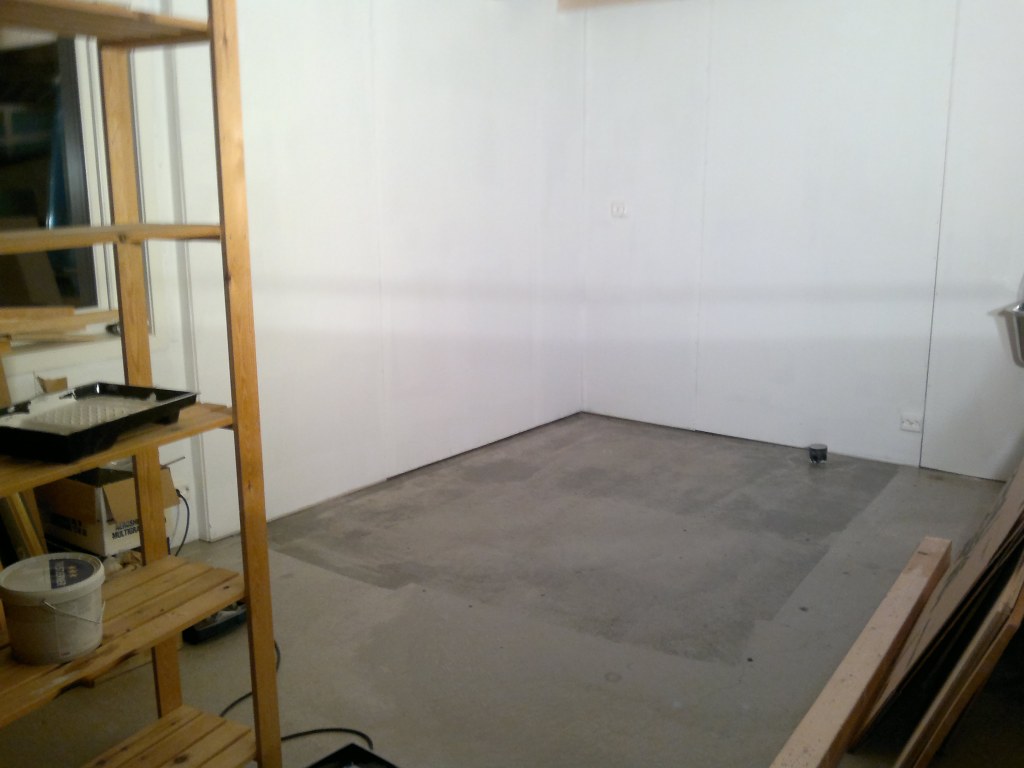
When the oil dried it didn't look all that bad. It evens out and look like concrete, only glossy and slightly darker tan. I decided I will just use the floor with the oil, that's good enough. In the pictures there is the dried oil from a couple of days back, and the new oil from today.


Monday, March 25, 2013

Toy or tool?

I have used old fashion paper maps earlier, and for flight planning I have used paper maps, Excel, protractor etc. Time to enter the new age, so I got a Nexus 7 (Android pad) and PocketFMS. PocketFMS is nice because it works on a PC, and any other device you may have (Android, Apple or the old Windows Mobile), and it works all places at once with one single license. I can use may PC for planning, and save the flight plans in the "sky". When I fly, I only need my Nexus, and download a previously saved flight plan, appending real time weather etc and so on. I can also use the Nexus for point and drag planning, but it is faster and more practical with a PC. For Norway ICAO maps can be used as background maps together with elevation maps (3D view).

PocketFMS also works seamlessly with MGL Avionics EFIS (Enigma, Odyssey and so on), meaning a map license on PocketFMS also works on MGL EFIS (same maps, same flight plans etc). It seemingly work with Dynon and AFS.

I got this only a couple of days ago, so I don't know how well it works for real flying (will the batteries last etc). Impressive software this PocketFMS even though it is a bit rough around the edges.

Oiling the shop floor

The floor was dry enough to oil. Did the "plastic test" over night, and no moisture seen. The function of the oil is apparently to penetrate and bind the concrete to make it less brittle, and to withstand water and oils. Unlike paint, the wear will be on the concrete itself, but since the oil make the surface much less brittle, it doesn't shed particles (dust) so the surface will last forever. The surface becomes very hard and ductile, and this is what is used in parking houses amongst other things.

This is all fine, but the oil also makes the floor look very ugly! I'll let it dry until tomorrow and decide if I also put some paint on it (the oil also function as a primer).


Sunday, March 24, 2013

Maintenance

A couple of weekends ago I attended a course in maintenance at EAA Norway at Kjeller airport. This course is required to do 100h/yearly maintenance on an experimental aircraft that you have built yourself. It was an interesting course and I also met several other builders (not many around where I live).

Painted the half of the walls in the shop. Then I have to move stuff around to paint the other half. On the floor I will simply use something called concrete oil, but I have to wait another month or two until the concrete floor is fully dry. Wondering about using the lower half of IKEA kitchen furniture as building bench along the one of the walls.


Saturday, December 15, 2012

More shop

Only plumbing and painting remains.


Sunday, December 2, 2012

Army Cub to Oppdal

Took a trip to Oppdal with the Army Cub from 1949 a couple of weeks ago. My neighbour was a passenger in the nice cold weather. Only one student flew that day. He was practising solo landings with the ASK-13 in the nice but calm weather (no wind and consequently no waves that day to keep the gliders in the air). The student was from Israel, and his plan is to go back to Israel to try to become a fighter pilot ones he have the gliding licence and some hours.


The shop is almost there

The shop is almost finished. Some work remains on the interior with the walls. When that is done, all the airplane stuff must be moved to the new shop, and the old shop shall be made into a living room again. Then, I can start decorating the shop with table etc + some painting. The large door is a sliding door for easy access. It can also relatively easily be removed when needed. Originally the whole thing should be finished by now, but the chief carpenter got seriously ill (blood clot in the brain), so things slowed down. He is better now, but he is not allowed to drive a car.

Previously the priming room was inside the house. A new priming booth in the garage will be made. The fumes from the priming is not compatible with the wife...

The 4 new bedrooms and a living room in the old house is now finished, only the last living room remains.


Wednesday, October 10, 2012

The back wall of the shop

On the back side of the shop the wall need to be made of some kind of brick or concrete. It also need to be insulated. My wall is made of this new "material" or process from Vartdal. It consists of foam bricks that are set in place, then filled with reinforcement bars and concrete is poured into it. Almost exactly like LEGO. The result is a very strong and completely insulated wall. On the inside the wall must be plated with sheets of plaster for fire proofing. A rather interesting house building concept and a movie of the process can be seen here

Wednesday, October 3, 2012

Concrete floor in place

Early this morning the concrete was pored in to make the floor. As can be seen on the right edge, the floor got a bit larger than planned...


Tuesday, October 2, 2012

Piper Pa-25 Pawnee

Cool picture of LN-NTH taken some weeks ago.

The new shop - base

The base for the new shop is finally being finished. After digging and blasting, the concrete floor will be laid tomorrow on top of insulation and steel.